

Overemployed Cloud Engineer: The Honest Feasibility Guide for 2026
May 27, 2026 | by Ian Adair
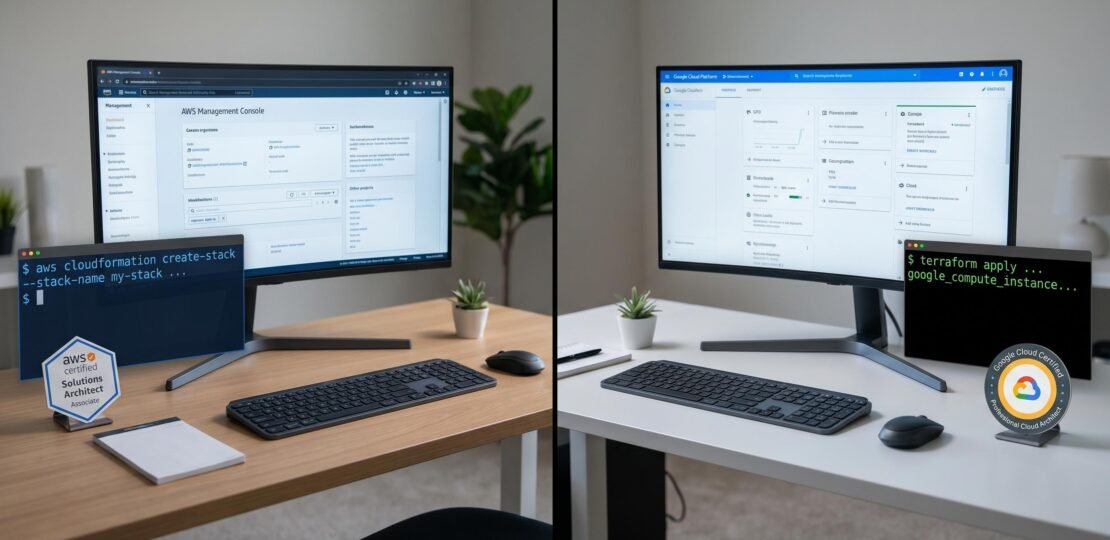
Overemployed Cloud Engineer: The Honest Feasibility Guide for 2026
Cloud engineering sits near the top of the overemployment food chain. The work is remote-native, the tooling is web-based, the deliverables are infrastructure-as-code commits and architecture diagrams, and senior comp routinely clears six figures at a single shop. Stack two of these roles and you are looking at a household income that competes with mid-career FAANG total comp, often without the interview gauntlet.
But here is the catch nobody puts in the recruiting pitch. “Cloud engineer” is not one job. It is a spectrum of roles with wildly different operational expectations. A cloud architect spends their week in design reviews and Lucidchart. An SRE spends their week wearing a pager and writing postmortems. Both have “cloud engineer” in their LinkedIn headline. Only one of them can realistically hold two of these jobs at once.
This guide breaks down which cloud roles are OE-compatible, which are minefields, and how to evaluate a potential J2 before you sign. We cover the on-call math, the CloudTrail paper trail, the salary stack, and the red flags that should make you walk away from an offer. If you are already overemployed in another tech function, you may also want to read our guide to DevOps engineers working OE, since the playbooks overlap heavily.
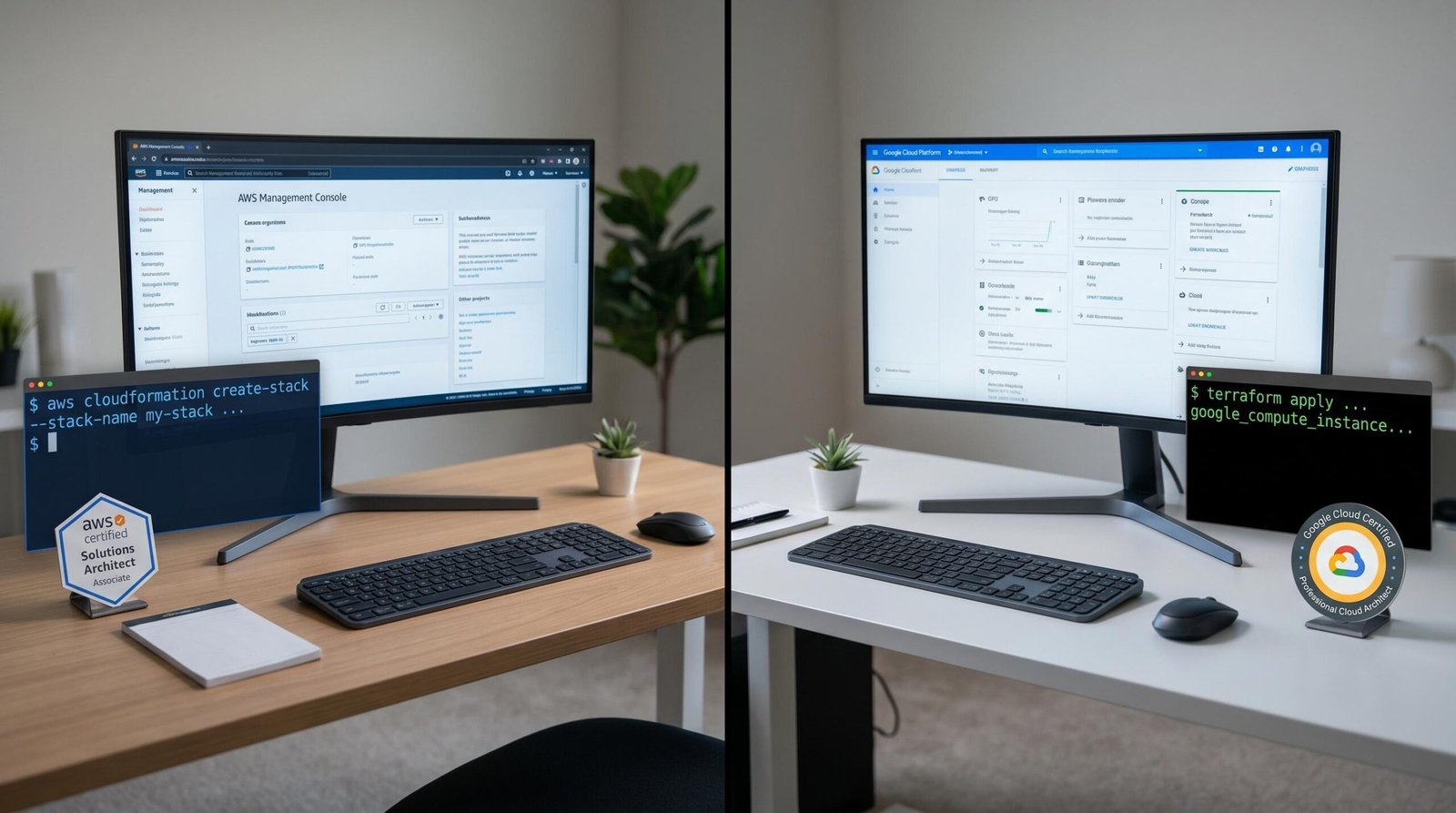
Quick Answer: Cloud engineers can work two remote jobs, but feasibility depends heavily on role type. Cloud architects and FinOps engineers are the most OE-compatible, with design-heavy, async work and minimal on-call requirements. SREs and platform engineers face the steepest challenges due to on-call rotations and incident response obligations.
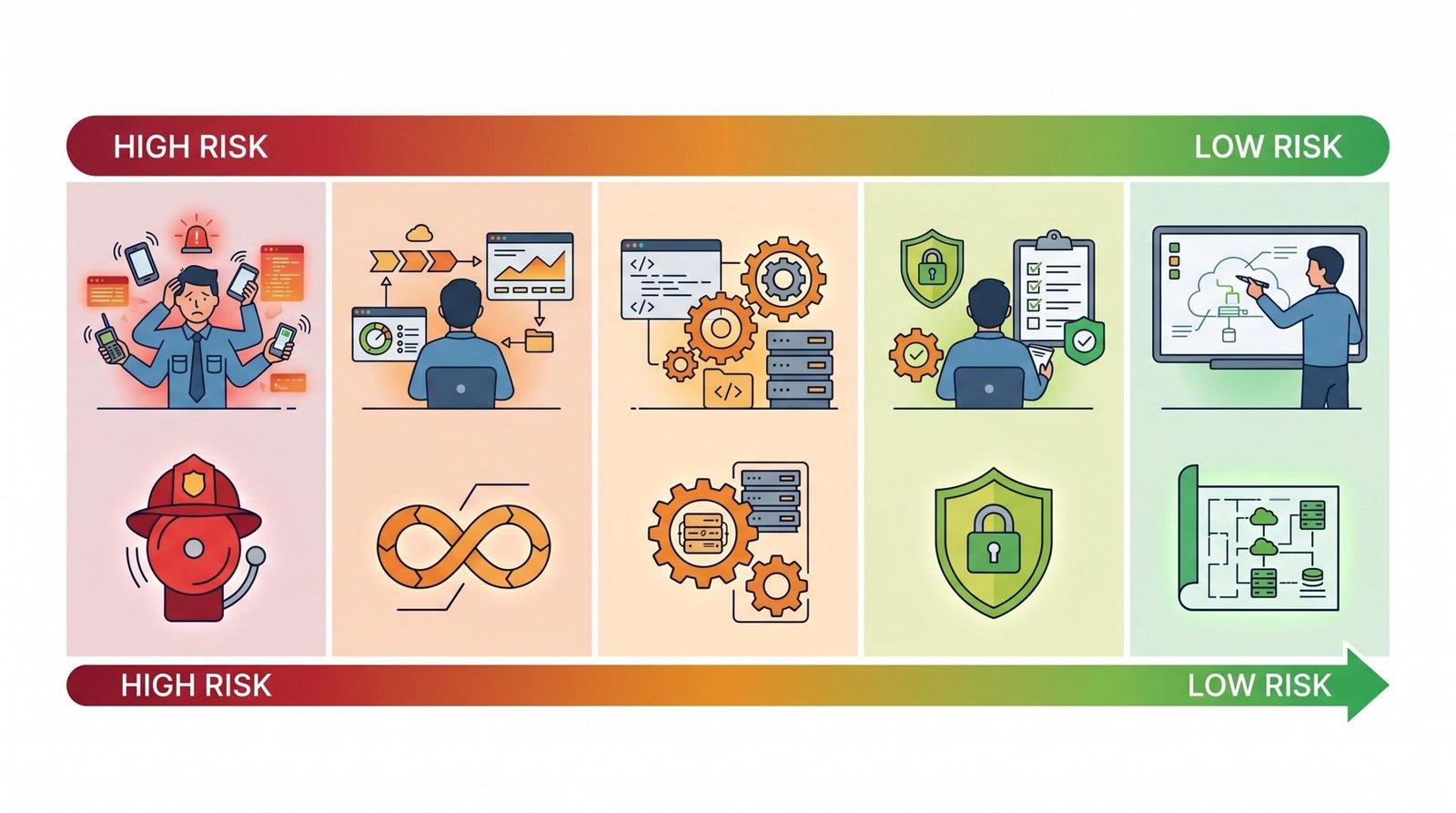
The Cloud Role Spectrum: OE Feasibility Varies by Role Type
If you take one thing from this article, take this. The title “cloud engineer” hides enormous variance in day-to-day operational load. Two engineers with identical resumes can land jobs where one writes 80% of their week and the other firefights 80% of their week. Choosing the right role on each side of your OE stack is the single biggest lever you control.
Here is how the major cloud role families break down by overemployment compatibility.
SRE / Site Reliability Engineer (Hardest)
SREs are the firefighters of cloud. They own service-level objectives, run incident response, maintain runbooks, and rotate through on-call. A typical SRE rotation puts you primary for one week out of every three or four, with the secondary engineer expected to back you up during that window. When pages fire at 2 AM on a Tuesday, you are expected to be on a video bridge inside ten minutes.
This is structurally incompatible with running a second job. Even a quiet on-call week destroys your ability to commit calendar time elsewhere. A bad week will torch both jobs simultaneously. If you are an SRE and want to OE, your move is to first transition into a less ops-heavy cloud role.
Cloud Architect / Solutions Architect (Easiest)
This is the OE sweet spot. Cloud architects produce designs, run architecture review boards, advise product teams, evaluate vendors, and review IaC changes for security and cost. Their week is meetings, documents, and diagrams. They are not on rotation. They do not get paged. When something breaks at 3 AM, the SRE handles it, and the architect reviews the postmortem two days later.
Two architect roles can be run in parallel by a competent engineer with sharp calendar discipline. The work is async-friendly, the deliverables are batch-processed, and meetings can be stacked into a focused block of each day. We have seen experienced architects sustain this pattern for years.
Cloud DevOps / Platform Automation Engineer (Good Fit)
Platform engineers build the internal tooling other engineers use. CI/CD pipelines, Terraform modules, internal developer platforms, Kubernetes operators, secrets management. The work is project-based, the deliverables are pull requests and platform features, and the time horizon is sprints, not minutes.
The catch is that platform teams sometimes carry partial on-call for the platform itself, which means you might get paged for a CI/CD outage. This is much rarer than SRE paging and usually scopes to business hours only. A well-scoped platform role is among the better OE options outside of pure architect work.
Cloud Security Engineer (Medium)
Cloud security engineers split their time between proactive work (policy, IAM design, threat modeling, compliance) and reactive work (security incident response, alert triage, audit support). The proactive bucket is OE-friendly. The reactive bucket can be a nightmare, especially if the company is under SOC 2, FedRAMP, or HIPAA scrutiny.
The deciding factor is whether the role pulls you into the IR rotation. If yes, treat it like an SRE role. If no, it is closer to architect work in operational flavor.
FinOps Engineer / Cloud Cost Engineer (Excellent Fit)
FinOps is the dark horse of OE-friendly cloud roles. Cloud cost engineers spend their week analyzing usage data, tagging resources, building chargeback dashboards, identifying waste, negotiating committed-use discounts, and reporting to finance. The work is analytical, async, and entirely free of operational alerts. Nobody gets paged because an EC2 instance is 30% underutilized.
FinOps roles are also growing fast as organizations get serious about cloud spend. The combination of high demand, async work patterns, and zero on-call makes FinOps arguably the best OE-compatible cloud specialization in the market today.
Comparison Table
| Cloud Role Type | OE Feasibility (1-10) | Avg Salary | Typical Hours/Week | On-Call Risk |
|---|---|---|---|---|
| Cloud Architect / Solutions Architect | 9 | $160,000-$185,000 | 30-40 | None |
| FinOps / Cloud Cost Engineer | 9 | $130,000-$155,000 | 30-40 | None |
| Cloud DevOps / Platform Engineer | 7 | $135,000-$160,000 | 35-45 | Low-Medium |
| Cloud Security Engineer (proactive) | 7 | $140,000-$170,000 | 35-45 | Low |
| Cloud Security Engineer (IR rotation) | 3 | $140,000-$170,000 | 40-55 | High |
| Cloud / Platform Engineer (generic) | 6 | $135,557 (Indeed, May 2026) | 35-45 | Medium |
| SRE / Site Reliability Engineer | 2 | $155,000-$190,000 | 45-60+ | Very High |
The On-Call Problem: OE’s Biggest Cloud Challenge
On-call is the single biggest reason cloud engineers fail at OE. It is also the most overlooked variable when people evaluate a J2. Recruiters do not mention it on the first call. Job descriptions bury it under “occasional after-hours support.” Then you sign the offer and learn you are primary every fourth week.
Let us do the math on the two-rotation problem. Say J1 puts you on primary on-call one week out of every four. That is a 25% chance any given week is your primary week at J1. If J2 has the same rotation cadence, the same logic applies independently. The probability that both rotations land you on primary in the same week is 0.25 multiplied by 0.25, or roughly 1 in 16. That means in any rolling four-month window, statistically you will hit a week where both jobs are paging you, alone, at the same time.
It gets worse. Even on the weeks where only one job has you primary, you are spending evenings and nights tethered to a laptop. Your J2 deliverables suffer. Your sleep suffers. Your ability to context-switch evaporates. The Google SRE Book lays out the gold-standard principle on this point. In their guidance on being on call, Google states that on-call work should consume no more than 25% of an engineer’s time. They wrote that as a healthy ceiling for one job. Stack two on-call rotations and you are blowing past that ceiling structurally.
How to Scope On-Call Before You Sign
Before accepting any J2 cloud role, you need direct answers to these questions:
- What is the on-call rotation cadence? (Weekly, biweekly, monthly?)
- How many engineers are in the rotation? (Fewer than 4 is a red flag.)
- What is the average page volume per rotation week? (Anything above 3-5 pages a week means the platform is unstable.)
- What is the response SLA when paged? (10 minutes is industry standard, but some shops demand 5.)
- Is there a secondary on-call who gets paged if primary misses?
- Does on-call cover weekends and holidays, or business hours only?
- Is there comp time, premium pay, or PTO offset for on-call weeks?
If the recruiter or hiring manager cannot answer these questions cleanly, that itself is a signal. A healthy engineering org has these numbers at the ready. An unhealthy one will dodge or hedge.
The “Secondary Only” Strategy
One tactical move worth knowing. At many companies, the secondary on-call almost never gets paged. The secondary exists as a backup if primary fails to acknowledge within the SLA, which is rare in practice. If you can negotiate to be on secondary rotation only at J2, you can claim full on-call participation on your resume while functionally never getting paged.
This works best at companies where the on-call structure is mature enough that primaries reliably ack. It also works well when you are taking a senior or staff-level role and the company is willing to slot you outside the front-line rotation. We suggest framing the ask as “I am happy to mentor and back up primary, but I want to focus my hands-on time on architecture and platform work, not pager response.”
CloudTrail, IaC, and the Paper Trail Problem
This is the section nobody writes, because most OE guides are written by people who do not understand cloud-native observability. Cloud engineering work leaves a forensic trail that other knowledge work simply does not. Understanding the trail is the difference between clean OE and accidental exposure.
Git Commits Are Identifying
Every git commit you author carries your configured email address and an ISO timestamp. If you use the same personal email for J1 and J2 git work, your commit history becomes a sortable record of when you were active on which codebase. A J1 employer who decides to audit your activity can pull your commit metadata from their internal repos and cross-reference timestamps. They probably will not. But the data is there.
Mitigation is simple. Set git config user.email to a different identity per repository, or per cloned directory. Use the work-issued email for that work’s repos, full stop. Never push J2 commits with your J1 email or vice versa.
CloudTrail Logs Every API Call
AWS CloudTrail captures every API action made against an AWS account, including the IAM user or role that made it, the source IP, the user agent, and the exact timestamp. If you are running J2 work in an AWS account that you also access from a personal device, and J1 ever has occasion to look at your personal cloud activity (an unusual but possible scenario in some sensitive verticals), there is a record.
The principle here is strict device and identity separation. Your J1 laptop should never touch J2 AWS accounts. Your J2 laptop should never touch J1 AWS accounts. Use separate browser profiles. Use separate AWS CLI profiles. Use separate SSO entry points.
Infrastructure-as-Code History
Terraform, Pulumi, and CloudFormation all generate state files and commit histories that timestamp every infrastructure change with the author identity. If you push a Terraform change at 2:47 PM on a Tuesday during what was supposed to be a J1 meeting block, that timestamp lives forever in the state backend and git history. This rarely matters in isolation, but it matters in aggregate if anyone ever has reason to scrutinize.
The same mitigations apply. Separate identities, separate devices, separate accounts. This is not deception. It is professional hygiene. Cloud engineers routinely maintain client accounts, freelance work, certification lab accounts, and personal projects, all separated by these exact patterns. The OE use case is just one more variation on standard isolation practice.
This Is Not Deception
Worth saying explicitly. Maintaining clean separation between work contexts is a baseline expectation in cloud engineering. Security teams require it. Compliance frameworks demand it. You are not doing anything novel by keeping J1 and J2 systems strictly isolated. You would do exactly the same thing as a contractor with multiple clients, as an open-source maintainer with a day job, or as a moonlighter with a side business. For more on the legal and contractual angles, see our overview of whether you can legally hold two full-time jobs.
Certifications: AWS, GCP, Azure, Yours, Not Your Employer’s
One of the structural advantages cloud engineers have over many other tech roles is that their professional credentials are personal property. AWS certifications, Google Cloud certifications, and Azure certifications are all issued to individuals, not to companies. They are tied to your personal certification account, not your employer.
This matters for OE in two ways. First, per AWS certification policies, your AWS credentials belong to you. You earned them, you carry them between jobs, and you can list them publicly on LinkedIn without any employer claim on them. Second, holding multiple cloud provider certifications is not just normal, it is actively a career asset. Hiring managers expect senior cloud engineers to have working knowledge of at least two of the big three.
For OE, multi-cloud expertise is gold. If J1 is an AWS shop and J2 is a GCP shop, you have zero account crossover risk by design. You cannot accidentally log into the wrong console because the consoles are different products. You use separate IAM systems, separate billing, separate CLIs. The cognitive overhead of switching is real, but the isolation is excellent.
On LinkedIn, listing AWS Solutions Architect Professional alongside Google Cloud Professional Cloud Architect alongside Azure Solutions Architect Expert is a flex, not a flag. Recruiters reach out more, not less. Multi-cloud is the dominant pattern in the market, and any employer who treats it as suspicious is signaling something unhealthy about their own engineering culture.
Salary Math: What Two Cloud Engineering Salaries Look Like
Let us run the numbers. The Indeed-reported average salary for a cloud engineer in May 2026 sits at $135,557 per year. That is the baseline. Two roles at the baseline gives you a household income of $271,114. That is your OE floor in cloud, and it already clears the comp of most VPs at non-tech companies.
Now scale up. Senior cloud architects routinely land between $160,000 and $185,000 at well-funded companies. Two architect roles in that range gives you $320,000 to $370,000. FinOps engineers, while paid slightly less than architects on average, still land in the $130,000 to $155,000 band, with strong senior outliers up to $175,000.
| OE Scenario | J1 Salary | J2 Salary | Combined Annual |
|---|---|---|---|
| Two mid-market cloud engineers | $135,557 | $135,557 | $271,114 |
| Two senior cloud architects | $175,000 | $165,000 | $340,000 |
| Architect + FinOps | $170,000 | $145,000 | $315,000 |
| Architect + Platform Engineer | $175,000 | $150,000 | $325,000 |
| Two FinOps engineers | $150,000 | $140,000 | $290,000 |
| Aggressive: Two Staff Architects | $200,000 | $190,000 | $390,000 |
Note that these figures are base salary only. Cloud engineers at well-funded companies often receive equity and annual bonuses that add 15-30% on top of base. Two roles with full benefits stacks means double 401(k) employer matches, double employer-sponsored insurance options (you usually pick one and bank the other’s cash), and double accrued PTO. For broader OE income strategy across tech roles, see our breakdown of working two remote jobs.
The Optimal OE Cloud Stack
If you are designing your OE setup from scratch, here is the configuration we suggest as a starting point. It minimizes operational risk while maximizing earnings.
J1: Cloud Architect or FinOps role. No on-call. Async-heavy. High base salary. This is your anchor job, the one with the calendar credibility and the most senior responsibilities. You stay engaged with strategic work and architecture reviews, but you control your schedule.
J2: Cloud Automation or Platform Engineer role. Low operational load, project-based deliverables, IaC commits. Avoid roles that include 24/7 on-call. Look for platform teams with mature alerting and clear escalation chains. This is your second income stream, sized for sustainable output rather than maximum visibility.
Cross-provider strategy. Whenever possible, choose J1 and J2 on different cloud providers. J1 on AWS, J2 on GCP. Or J1 on Azure, J2 on AWS. This eliminates accidental account crossover and gives you clean cognitive partitioning between the two roles. You are also building multi-cloud skills the entire time, which only increases your market value.
C2C as J2 option. If you can find J2 as a corp-to-corp contract through your own LLC, that further reduces paper trail overlap and gives you flexibility on benefits structuring. Our deep-dive on corp-to-corp vs W2 breaks down the tradeoffs.
Tooling separation. Maintain separate AWS CLI profiles named explicitly for each job (e.g., aws-j1-prod, aws-j2-dev). Use separate Terraform state backends, never share. Configure git config user.email per repository to match the employer’s expected identity. Use distinct browser profiles, ideally in Firefox containers or separate Chrome profiles, one per job. If your budget allows, dedicate one physical laptop per job. Many OE cloud engineers do exactly this and never regret it.
Red Flags When Evaluating a J2 Cloud Role
Not every cloud engineering job is OE-compatible. Some roles are designed in ways that make stacking them with another job structurally impossible, no matter how disciplined you are. Watch for these signals during the interview process and walk away if you see them.
- “You’ll be the only cloud person on the team.” This means on-call falls entirely on you with no rotation backup. You will be paged for every cloud-related issue, day or night, weekend or holiday. There is no way to make this OE-compatible.
- “We use real-time incident response Slack channels.” Translation: the team expects you to be watching Slack constantly, ready to jump on anything that surfaces. This is incompatible with focused work on a second job. If they mention “ambient awareness” or “always-on culture,” run.
- “We’re all-in on [single cloud] and our infra is single-tenant and sensitive.” This is a setup that often comes with monitoring overhead, security clearance theatrics, and surveillance tooling on work devices that can include keystroke logging and activity monitors. Hard to OE around.
- “We do weekly war room reviews of every infrastructure change.” Micromanagement signal. Means you will be expected to defend every commit in a multi-hour meeting, which kills the async work patterns OE relies on.
- Job posting mentions 24/7, “follow-the-sun,” or “weekend coverage.” These phrases mean exactly what they say. The role is designed around being available around the clock. Even if it pays well, it cannot be OE’d.
- The hiring manager dodges questions about on-call cadence. If you ask directly and get vague answers, it means either they do not have a structured rotation (red flag) or they know the answer will scare you off (also red flag).
- The team’s GitHub or commit history shows heavy weekend and late-night activity. If you can see the team’s public output and it is full of 11 PM and Sunday commits, that culture is baked in. You cannot reform it from the inside as a new hire.
If you encounter two or more of these signals in a single role, pass. There are enough OE-friendly cloud roles in the market that you do not need to force-fit a bad match. For broader signals on employer compatibility, our writeup on moonlighting policies covers the contractual side, and overemployment legality covers the legal landscape.
Putting It All Together
Cloud engineering is one of the most OE-friendly disciplines in tech, but only if you select your roles deliberately. The career path from junior platform engineer to senior architect is also a path toward more OE-compatible work, which is a happy alignment of career incentive and OE incentive. You do not have to choose between progressing in your craft and stacking income. Both compound together.
If you are just starting to think about overemployment as a strategy, we suggest reading our walkthrough on how to get started with OE for the broader frameworks. If you are already overemployed in a different specialization and considering a cloud-flavored J2, the playbook for software engineers in this cluster covers complementary tactics. And remember, employer attitudes toward outside work vary widely. The Society for Human Resource Management has covered the spectrum of employer policies toward moonlighting workers, and the takeaway is that most employers care about conflict of interest and performance, not about a second job in the abstract.
FAQ
Can a cloud engineer work two full-time jobs?
Yes, cloud engineers are among the better-positioned tech workers for overemployment. The work is remote-native, async-friendly, and produces measurable deliverables (commits, designs, reports) that translate cleanly to outcomes-based evaluation. The main limiting factor is on-call load. Engineers in roles without on-call (architects, FinOps, proactive security) sustain OE most successfully. SREs and heavy operational roles struggle.
What type of cloud role is best for overemployment?
Cloud architect and FinOps engineer roles are the most OE-compatible. Both feature async work patterns, design and analysis deliverables, and no operational paging requirements. Cloud automation and platform engineering roles are also workable provided the team has a healthy on-call rotation with four or more engineers and clear escalation paths.
Does OE as a cloud engineer violate my employment contract?
It depends entirely on your specific contract. Most standard employment agreements prohibit conflicts of interest and outside work that interferes with primary job performance, but very few flatly ban a second job. Review your offer letter, employee handbook, and any IP assignment clauses. If you are unsure, consult an employment attorney in your state. Outside-work approval clauses are common, and some employers will grant approval if you ask in good faith. Our guide on whether you can legally hold two full-time jobs covers the contractual analysis in depth.
Can my employer detect I’m working two cloud jobs?
Detection risk exists but is manageable. The main vectors are: device monitoring software (if installed on your work laptop), LinkedIn changes that show overlapping employment dates, accidental cross-contamination of accounts or systems, and tax forms (W-2s arrive at your home, not your employer). Cloud engineers who maintain strict device and identity separation and who keep LinkedIn current with a single primary role rarely get detected. Sloppy separation is what trips people up.
Are AWS certifications tied to my employer?
No. AWS, GCP, and Azure certifications are all issued to individuals through personal accounts. They are your property, portable between employers, and they remain valid regardless of your current job status. Listing multiple cloud certifications publicly is standard practice and a career asset, not a flag for OE detection.
Can SREs be overemployed?
Realistically, no, not while remaining in a traditional SRE role at both jobs. The on-call load is structurally incompatible with running a second full-time position. SREs who want to OE typically transition into either cloud architecture, platform engineering, or FinOps first, then stack a second job from that less ops-heavy position. The transition is straightforward because SREs have deep operational expertise that other cloud roles value.
How do I find cloud engineering jobs that are OE-friendly?
Look for postings that emphasize async work, written documentation culture, and outcomes-based evaluation. Companies that publish their engineering handbooks publicly (GitLab, Buffer, Doist-style) tend to have OE-friendly cultures by default. Avoid postings that mention 24/7 coverage, follow-the-sun rotations, or “always-on” expectations. Smaller startups with only one or two cloud engineers are usually worse for OE than mid-sized companies with mature platform teams. Roles labeled “staff” or “principal” architect typically come with more autonomy and fewer operational duties than mid-level roles.
RELATED POSTS
View all


Can a Physical Mouse Jiggler Be Detected? The Honest Answer for 2026
December 22, 2023 | by overemployedtoolkit.com

Is Overemployment Legal? What You Need to Know (2026)
May 12, 2026 | by Ian Adair

Moonlighting Policy: What Your Employer Can (and Can’t) Restrict in 2026
May 23, 2026 | by Ian Adair