

Overemployed Product Manager: The Honest OE Feasibility Guide for 2026
December 22, 2023 | by overemployedtoolkit.com
Overemployed Product Manager: The Honest OE Feasibility Guide for 2026
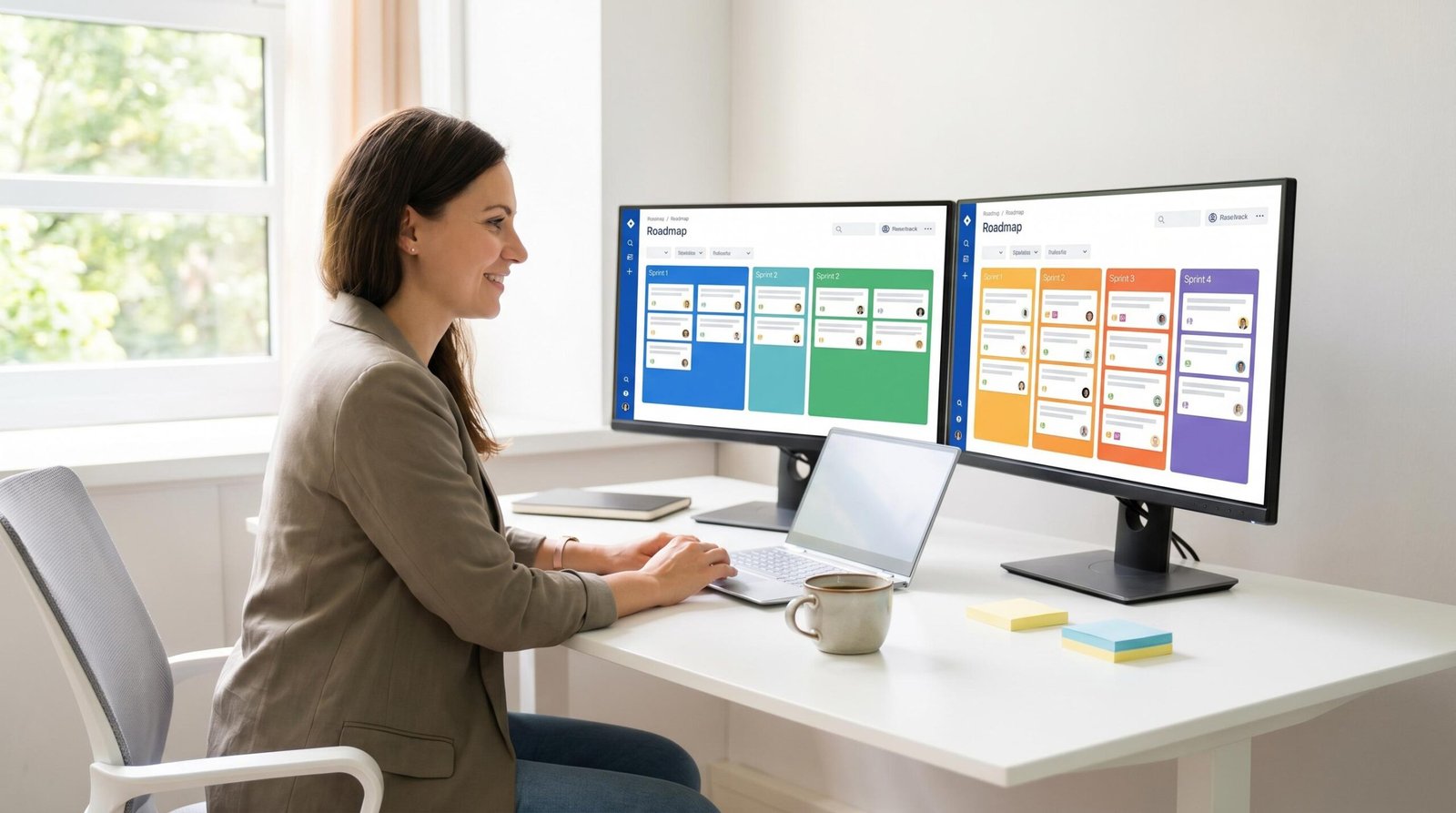
The PM OE Feasibility Score: 7.5/10
If you’re a product manager reading the best jobs for going overemployed rankings and wondering where your role lands, here’s the honest answer: PMs sit at 7.5 out of 10. That’s a strong score, but the path is narrower than the one software engineers walk. The role rewards autonomy at senior levels, punishes you brutally if you’re junior, and varies wildly by product type.
The strengths driving that 7.5 are real. Most PMs operate in remote-first or hybrid-remote organizations where output is judged by shipped features, validated experiments, and quarterly outcomes rather than seat time. A senior PM at a mid-market B2B SaaS company has near-total control over their calendar, can batch async communication, and produces deliverables (PRDs, roadmaps, OKRs) that exist on company timelines rather than minute-by-minute attendance.
The weaknesses are equally real. Discovery work is meeting-heavy. Stakeholder management requires presence. Roadmap ownership creates visibility that other roles don’t carry. If your product is consumer-facing or you’re at an early-stage startup, the 7.5 collapses fast. This guide breaks down exactly where the role works for OE and where it does not, so you can make a clean decision before you start interviewing for that second job.
Why PMs Make Strong OE Candidates
The definition of a product manager centers on outcomes: you’re accountable for what gets built, why it gets built, and whether customers actually want it. That outcome orientation is the single most important reason PMs can run OE successfully. Nobody at your company cares whether you worked from 9 to 5 or from 6 to noon, as long as the roadmap moves and the team has clarity. That ownership model maps cleanly onto OE life.
Output Ownership Beats Hours-Based Surveillance
Companies that hire PMs are buying judgment, not hours. Your boss does not watch your green dot on Slack. Your boss watches whether your team shipped the feature on time, whether the metrics moved, and whether engineering trusts your specs. As long as those three things stay true, you have enormous flexibility to schedule your real work whenever it fits.
Contrast this with a customer service role where someone is literally counting calls per hour. Or a junior analyst whose manager wants to see them in standup at 9 AM sharp. PM roles, particularly above the IC level, operate on a completely different surveillance model. That’s the foundation of the OE feasibility case.
Calendar Control at Senior Levels
Senior PMs and above typically own their calendars. You can block 9 to noon for “deep work” without anyone questioning it. You can decline meetings that don’t include a decision you need to make. You can move standups to async Slack updates if your team agrees. This calendar autonomy is the difference between OE working and OE failing.
At the IC PM level you have less control, but you can usually still defend two to three hours of focused time per day. The trick is establishing that pattern early, before anyone expects you to be reactive. We suggest setting up recurring deep work blocks during your first two weeks at any new PM role, so the calendar pattern looks normal and protected by the time you actually need it.
Async-First Work Product
Everything a PM produces is async-friendly. PRDs live in Notion, Confluence, or Google Docs. Roadmaps live in Productboard, Aha, or a spreadsheet. Specs live in Jira. User research notes live in Dovetail. All of it is timestamped, all of it is reviewable on someone else’s schedule, and none of it requires you to be online when your stakeholders are. You can write a PRD at 6 AM, ship it for review, and not respond to comments until 4 PM. That’s the rhythm OE PMs build their day around.
Remote-Native Workflows
Most tech companies that hire PMs in 2026 are remote-first or remote-friendly. The pandemic-era shift to distributed product teams hasn’t reversed in any meaningful way at the companies that pay PMs well. That means standups are on Zoom, sprint reviews are recorded, and watercooler conversations happen in Slack threads you can scroll back through. None of these workflows assume you’re in a physical office, and none of them detect whether you’re also logged into a second company’s Slack.
The Real Challenges for OE PMs
The honest counterweight to that 7.5 score is the set of challenges that competitor articles ignore. PM work has specific failure modes that other OE roles don’t share, and you need to understand them before you commit.
Discovery Is Meeting-Heavy and Stakeholder-Facing
The hardest part of OE as a PM is discovery work. When you’re talking to ten customers in a single quarter, those calls have to happen on someone’s calendar. Customer success teams set them up. Sales requests them. You can’t say “I’ll talk to this enterprise customer async” when they want a video call with the product team. Discovery cadence is the single biggest constraint on OE PM life.
This is why we suggest leaning hard into async user research tools and batching discovery calls into one or two days per week. If you can compress all your sync customer time into Tuesday afternoons and Thursday mornings, you free up the rest of the week for both jobs’ execution work.
Roadmap Ownership Creates Accountability Vectors
Your roadmap is your fingerprint. It tells anyone reading it what you care about, how you think, and what you’re going to do for the next two quarters. If you build the same roadmap structure for two employers, even subconsciously, someone will eventually notice. We’ve seen OE PMs get caught because they used identical OKR phrasing across two companies, or because their roadmap milestones followed the same naming convention.
You’re a Single Point of Failure in Sprint Planning
If you’re the PM on a scrum team, you’re the only one who can answer “what should we build next?” If you’re double-booked or unavailable during a critical sprint planning session, the entire team is blocked. This is the operational risk OE PMs hate most. Mitigation requires preloading the backlog with detailed tickets so that any individual planning session can run on autopilot if you’re stretched thin.
Calendar App Synchronization
Google Calendar and Outlook both expose your free/busy patterns at the company level. Some companies use scheduling tools like Calendly, Chili Piper, or Reclaim that share availability across the organization. If your “available” slots at Job A look identical to your “available” slots at Job B, anyone with access to scheduling analytics can spot the pattern. This is why managing meetings while OE is its own skill that you have to develop deliberately.
Jira and Confluence Notification Leaks
This is the single most common detection vector for OE PMs and it’s almost completely preventable. Jira sends email notifications. Confluence sends email notifications. Productboard sends email notifications. If you use the same primary email (even a personal one) for sign-up across two jobs, or if you accidentally @ mention yourself with the wrong account in a comment, you’ve left a trail. Use separate work emails per job. Never share a primary personal email across jobs. Configure browser profiles so that you literally cannot cross-contaminate sessions.
OE Feasibility by Seniority
The PM OE feasibility score varies more by seniority than almost any other dimension. A staff PM has fundamentally different work than an APM, and the OE math reflects that.
| Level | OE Score | Key Reason |
|---|---|---|
| Associate PM / APM | 3/10 | High supervision, heavy mentoring needs, learning curve means skipping meetings is obvious |
| Product Manager (IC) | 5/10 | Moderate, discovery meetings are intense but execution phases are manageable |
| Senior Product Manager | 7/10 | Stronger calendar autonomy, can delegate more discovery tasks, trusted to work async |
| Staff / Principal PM | 8.5/10 | Strategy-level work is inherently async, fewer day-to-day firefights |
| Group PM / Director | 4/10 | High visibility, organizational politics require in-person relationship capital |
Why APM Scores So Low
If you’re an APM, you’re being mentored. Your manager wants to see you in meetings, wants you to shadow customer calls, wants to review your work in real time. The learning curve at this stage is the whole point of the role. Trying to OE as an APM is essentially trying to hide the learning, and you can’t hide it for long. Skip this OE strategy entirely until you’re at least a year into a mid-level PM role.
Why Director-Level Scores Drop
Counterintuitively, director-level PM roles are worse for OE than senior PM roles. Once you’re directing a PM team, the work shifts from product execution to organizational politics. You need to be in skip-level 1:1s, you need to attend executive offsites, you need to manage up to the CPO. This is relationship-driven work that can’t be done async, and it’s the kind of work that requires real attention. Hiding two director-level jobs is functionally impossible.
The Sweet Spot: Senior to Staff PM
The OE PM sweet spot is the senior-to-staff range. You have enough seniority to control your calendar, enough autonomy to define your own work, and enough trust to do your best thinking async. You’re not yet so senior that politics dominate your day. This is the level where the 8.5/10 staff PM score genuinely holds up in practice.
OE Feasibility by Product Type
The other dimension that dramatically shifts your OE feasibility is the type of product you’re managing. A B2B SaaS PM and a B2C consumer PM live in completely different worlds.
| Product Type | OE Score | Reason |
|---|---|---|
| B2C consumer app | 4/10 | On-call for incidents, constant user feedback loop, high urgency |
| B2B SaaS (mid-market) | 7/10 | Structured sprint cadence, async-friendly customer discovery |
| Internal / enterprise tools | 8/10 | Low external pressure, predictable sprint cadence |
| Platform / API / infrastructure | 8.5/10 | Mostly technical stakeholders, async-friendly, metrics-driven |
| Early-stage startup | 2/10 | You are the entire product function, impossible to OE |
Why Platform PM Wins
Platform and infrastructure PM work scores highest because the stakeholders are technical, the discovery happens through engineering channels rather than customer calls, and the work is heavily metrics-driven. You’re managing API uptime, SDK adoption, internal developer experience. These are all async-measurable outcomes. Customer feedback comes through GitHub issues, Slack threads, and quarterly developer surveys, none of which require you to be on a Zoom call at a specific time.
Why Consumer B2C Loses
Consumer apps live and die by user feedback velocity. Reviews come in hourly. Incidents happen on consumer hours, including evenings and weekends. Marketing wants you on launch calls, support wants you in escalation reviews, and the executive team watches DAU dashboards in real time. The pace of consumer product work makes OE genuinely hard. We’ve heard from r/overemployed community members who tried it and burned out within four months. The metric isn’t burnout from working too hard, it’s burnout from constant context switching at unpredictable times.
Internal Tools: The Hidden OE Goldmine
Internal tools PM roles are the underrated OE goldmine. Your “customers” are coworkers. They file requests in Jira, you ship features when you ship them, and there’s almost no external pressure. The product cadence is predictable, the stakeholder list is small, and nobody is going to schedule a 7 PM customer escalation call. If you can find two internal tools PM jobs, you have one of the best OE setups available.
What OE PMs Actually Earn
The financial case for OE PM is overwhelming. Even using conservative PM compensation data from Levels.fyi, the dual-income math is dramatic enough to fund early retirement in under a decade.
| Seniority | Single Job TC | Dual OE TC | Annual Premium |
|---|---|---|---|
| PM (IC) | $130K to $160K | $260K to $320K | +$130K to $160K |
| Senior PM | $160K to $220K | $320K to $440K | +$160K to $220K |
| Staff PM | $220K to $300K | $440K to $600K | +$220K to $300K |
TC here means total compensation including base salary, target bonus, and annualized RSU vesting. The Levels.fyi data captures the spread between tier-2 SaaS companies and FAANG-tier employers, so your real number depends heavily on where you land. A staff PM running two FAANG-tier roles can pull north of $700K in a peak vesting year. A staff PM running two mid-market SaaS roles is closer to the $440K low end. Either number transforms your savings rate.
What Two Years of OE PM Earnings Funds
If you OE successfully at senior PM level for two years, you’ve added roughly $320K to $440K in additional compensation over what a single role would pay. That’s a paid-off mortgage on a starter home in most US markets, or a fully-funded brokerage account that throws off enough dividends to cover a modest lifestyle indefinitely. The point of OE has never been to work forever at two jobs. The point is to compress a decade of saving into 24 to 36 months and exit the rat race entirely.
Detection Risks Specific to PMs
Most OE guides cover generic detection vectors like IP addresses, VPN configurations, and laptop fingerprinting. We’re going to skip those and focus on PM-specific risks that the generic guides miss.
Jira and Confluence Footprint
Your Atlassian footprint is loud. Every comment you leave is timestamped. Every ticket you create is attributed to you. Every PRD you update logs a revision history. If you cross-contaminate accounts, the trail is permanent and discoverable. Use separate browser profiles per job. Sign in only with your assigned work email per job. Never let Atlassian’s “remember me” cookies persist across sessions. We’ve seen PMs caught because they logged into Job A’s Confluence from a browser that still had Job B’s cookies, and the sysadmin spotted the dual account access.
PRD Template Fingerprints
Your PRD structure is unique. The way you organize problem statements, the headers you use, the way you phrase user stories, even the way you cite metrics: all of it is identifiable. If you ship the same PRD template at two companies, someone reading both will eventually notice. Build a fresh template structure per job. Different section headers, different phrasing patterns, different visual conventions. This sounds paranoid until you imagine two recruiters comparing your work at a conference.
Roadmap Naming Conventions
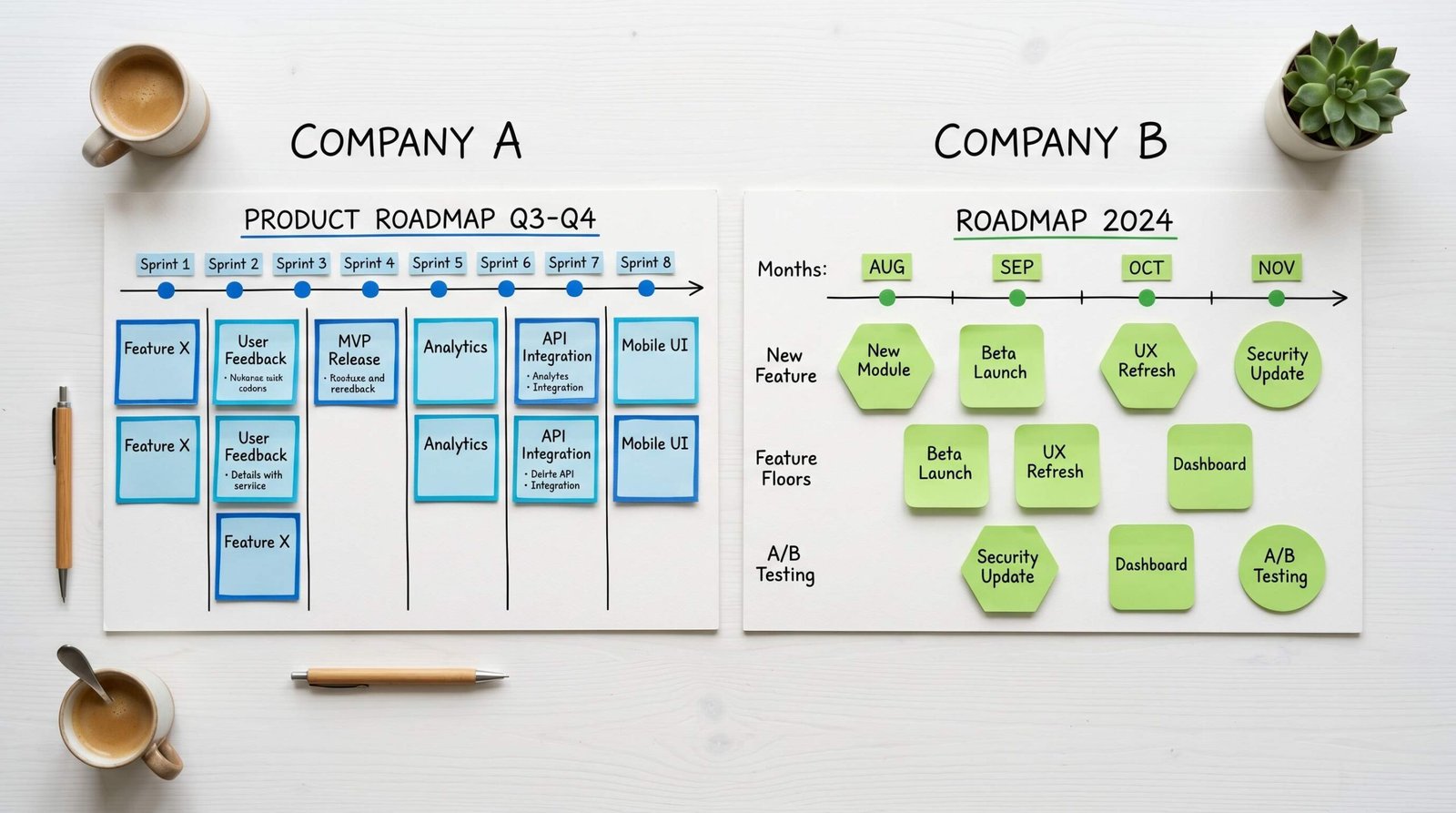
The way you name milestones, themes, and quarterly initiatives is part of your fingerprint. If Job A’s roadmap uses theme names like “Foundation” and “Growth” and “Scale,” and Job B’s roadmap uses the exact same labels, the overlap is a tell. We suggest using completely different naming schemes per job. One job gets nature-themed quarters (Spring Initiative, Summer Push). The other gets numbered phases (Q2 Phase 1, Q2 Phase 2). Make the visual styling different too. Different colors, different layouts, different tools where possible.
Discovery Call Cross-Contamination
Here’s the nightmare scenario: you’re running a discovery call at Job A, and the prospect mentions they work at Job B. Or worse, you’re running a discovery call at Job B, and the user mentions a feature that exists at Job A. The first protects itself: you just don’t continue the call and have a teammate handle it. The second is harder. We suggest scripting your discovery questions tightly per job and never describing competitor features by name. If a user mentions a competitor product, redirect to their use case, not the product details.
Sprint Review Recordings
Many companies auto-record sprint demos and post them in Slack or upload to internal Confluence. If you appear in two different sprint review recordings on the same day, with the same background, talking about completely different products, the visual record is damning if anyone ever pulls it. Use neutral backgrounds. Change your shirt between calls. Position your camera so the background is consistent across both jobs but doesn’t reveal anything specific. Better yet, use a virtual background that matches a fictional generic home office, identical across both jobs.
LinkedIn Activity Visibility
LinkedIn is the most public detection vector and it’s the easiest to fail. If you connect with coworkers from both jobs on the same LinkedIn profile, the relationship graph becomes visible. A recruiter at Job A who looks at your network and sees twenty people from Job B’s product team has all the information they need. Either keep your LinkedIn locked down (private network, no activity, no engagement), or maintain a single coherent professional identity that doesn’t show your current employer. Some OE PMs don’t list their current role on LinkedIn at all. That’s a valid choice if you can sell it during interviews.
Practical OE PM Strategy
The tactical playbook for OE PMs comes down to five disciplines: calendar control, communication batching, async discovery, work product differentiation, and time zone arbitrage. Get these five right and the 7.5 score becomes achievable in practice.
Calendar Strategy: Three-Hour Deep Work Blocks Per Day Per Job
The foundation of OE PM life is calendar discipline. Block three contiguous hours per day, per job, labeled as “focus time” or “deep work” or “strategic planning.” Six hours of focused time across two jobs leaves you eight hours for meetings, communication, and overhead. That math works. Color code your calendars by job. Never let two scheduling tools share a free/busy view. We suggest using one calendar (say, Google) as your master and importing the other (say, Outlook) as a read-only overlay so you can see conflicts but not let either side see the other.
Communication Batching
The instinct when you start OE is to respond to every Slack message immediately at both jobs, because you don’t want either job to think you’re slow. This is exactly wrong. Batch your responses. Check Slack at the top of every hour, never in between. Set your status to “in a meeting” or “focused” when you’re working on the other job. Aim for a 90-minute average response time on both jobs, which is well within tolerance for PM roles and gives you the breathing room you need.
Discovery Alternative: Async User Research
The biggest time sink in PM work is discovery, and the best way to reduce that load is to lean on async user research tools. Maze runs unmoderated usability tests while you sleep. UserTesting delivers video clips of users walking through your prototype. Dovetail organizes interview transcripts so you can synthesize without re-watching. Replace one round of sync discovery calls per quarter with a round of async testing, and you’ve reclaimed eight to twelve hours of meeting time.
PRD and Spec Workflow Per Employer
Build your PRD process to be high quality but customized per job. Maintain two distinct templates. Use different section headers. Use different phrasing for user stories. Reference different research methodologies. The work product itself should be excellent in both places, but the surface-level patterns should look different. This protects against the rare but catastrophic detection vector of someone reading your work at both companies.
Time Zone Arbitrage
If you can land one EST-based job and one PST-based job, the three-hour offset works in your favor. Your EST job’s afternoon is your PST job’s morning. Your PST job’s afternoon is your EST job’s evening. Each job thinks you’re working a normal local schedule, and the offset gives you natural breathing room to manage two workloads. How to become overemployed guides often emphasize this, and it remains one of the highest-leverage choices you can make. What makes a great product manager is partly about managing your time, and time zone arbitrage is just an aggressive form of that skill.
PM vs. Other OE Roles: Quick Comparison
If you’re weighing OE feasibility across roles before committing to a second PM job, here’s how PM stacks up against the other common OE careers covered in this series.
| Role | OE Score | Why |
|---|---|---|
| Software Engineer | 9/10 | Output-based, async, fewer meetings |
| Data Analyst | 8/10 | Query-and-report cycle, good async fit |
| Business Analyst | 7/10 | Similar to PM but less visible roadmap ownership |
| Product Manager | 7.5/10 | Strong async potential, discovery is the bottleneck |
| UX Designer | 6.5/10 | Portfolio footprints a risk, design reviews are sync |
The takeaway: PMs sit in the upper middle of the OE feasibility ranking. Software engineering remains the gold standard for OE because the work is the most async-friendly, but PM beats UX design and matches business analyst work for OE feasibility. If you’re a PM with engineering experience, you have an interesting strategic option: pair a PM role with an engineering role, because the work patterns are complementary and the detection vectors barely overlap.
When You Should NOT Try OE as a PM
Most OE PM guides skip this section because it’s bad for the narrative. But honest advice means telling you when this strategy fails. Here are the situations where you should not attempt OE as a product manager.
You’re the Only PM at an Early-Stage Startup
If you’re the sole PM at a company under fifty people, your absence is immediately visible. The CEO will text you. The VP of engineering will need answers on architecture decisions in real time. Sales will need positioning input within an hour. Solo PM at an early-stage company means you are the entire product function, and you cannot hide that load. Skip OE entirely if this is your situation, even if the salary is tempting.
Your Role Requires Physical Presence or Customer Visits
Some PM roles, particularly enterprise SaaS roles selling to financial services or healthcare, require regular customer site visits. If your boss expects you to fly to a customer location once a month, OE becomes geographically impossible. Same logic applies if your company holds quarterly in-person offsites where attendance is mandatory.
Your Company Uses Time-Tracking or Activity Monitoring
Some companies install activity monitoring software on company laptops. Time Doctor, Hubstaff, ActivTrak, Teramind. These tools track keystrokes, mouse movements, application focus, and idle time. If you sign an offer letter that includes language about “productivity monitoring” or “telemetry on company devices,” walk away from the OE plan immediately. This is the one detection vector you cannot defeat without buying a separate laptop and never touching the company-issued one.
You’re a New PM Still Learning the Fundamentals
If you’ve been a PM for less than 18 months, do not attempt OE. Your manager expects to see you learn. Your peers expect to mentor you. Your output reflects your inexperience, and adding a second job will make both jobs’ output worse. Spend two years mastering the role at one company first. Reach senior PM. Then start the OE strategy from a position of strength.
Your Product Directly Competes with Another Company
This is the legal landmine. If you’re a PM at Company A building a CRM, do not take a PM role at Company B also building a CRM. The non-compete and IP assignment language in your offer letters will eventually catch you, and the consequences include termination at both jobs plus potential litigation. Stay in adjacent industries or different product categories entirely.
Frequently Asked Questions
Can a product manager really hold two full-time jobs at once?
Yes, with the right combination of seniority and product type. A senior PM working in B2B SaaS or platform infrastructure has the calendar autonomy and async-friendly workflow that makes OE practical. The role’s output-based evaluation model is what makes it work. The community at r/overemployed has documented hundreds of successful PM OE cases over the last four years.
Is OE as a PM legal?
Holding two W-2 jobs simultaneously is legal in the US in almost all cases. The legal risks come from employment contracts, not labor law. If your contract has a moonlighting clause that requires disclosure, you’re in breach if you don’t disclose. If your contract has a non-compete clause and your second job is at a competitor, you’re in breach. Read both offer letters carefully, and avoid direct competitors. The strategy itself is legal, but contract violations can create civil liability.
How do you handle two sets of sprint ceremonies?
Stagger them. Most teams hold standups in the morning, sprint planning on Mondays, and sprint reviews on Fridays. If you can shift one team’s standup to 9 AM and the other to 11 AM, you’ve cleared the conflict. For sprint planning and sprint review, the trick is preloading detailed tickets and PRDs in advance so the live ceremonies require minimal real-time input from you. If conflicts arise, lean on time zone arbitrage or politely request a reschedule.
What happens if two jobs have overlapping meetings?
Decline the lower-stakes one. Send your contribution in writing ahead of the meeting. Reschedule for later in the week. Pre-record a Loom update if the meeting is just for status sharing. The reality is that most PM meetings are lower-stakes than they appear, and async substitutes work surprisingly well. If you have two genuinely critical meetings at the same time, you have to pick one and handle the other through detailed written follow-up. This is rare if you’ve structured your calendar correctly.
What’s the biggest mistake OE PMs make?
Trying to be a top performer at both jobs simultaneously. The goal of OE is to be a solid B+ performer at both jobs, not an A+ performer at either. PMs who try to over-deliver at both jobs burn out within six months and get caught when the strain shows. Aim for the 75th percentile at both companies. Hit your commitments, ship your roadmap, keep your team unblocked, and skip the stretch projects that would expose your time constraints.
How do I find my second PM job without alerting my current employer?
Keep your LinkedIn locked down. Don’t update your profile with “open to work” signals. Apply through job boards or company career pages directly rather than working with recruiters who post your resume widely. Use a personal email that doesn’t include your real name where possible. Schedule interviews during your existing calendar blocks for “focus time” so they look like normal busy hours. Most importantly, never tell anyone at your current company that you’re job searching, including coworkers you trust.
RELATED POSTS
View all

Overemployed Business Analyst: The Honest Feasibility Guide for 2026
December 22, 2023 | by overemployedtoolkit.com

How to Become Overemployed: A Step-by-Step Guide for 2026
May 12, 2026 | by Ian Adair

Can a Physical Mouse Jiggler Be Detected? The Honest Answer for 2026
December 22, 2023 | by overemployedtoolkit.com